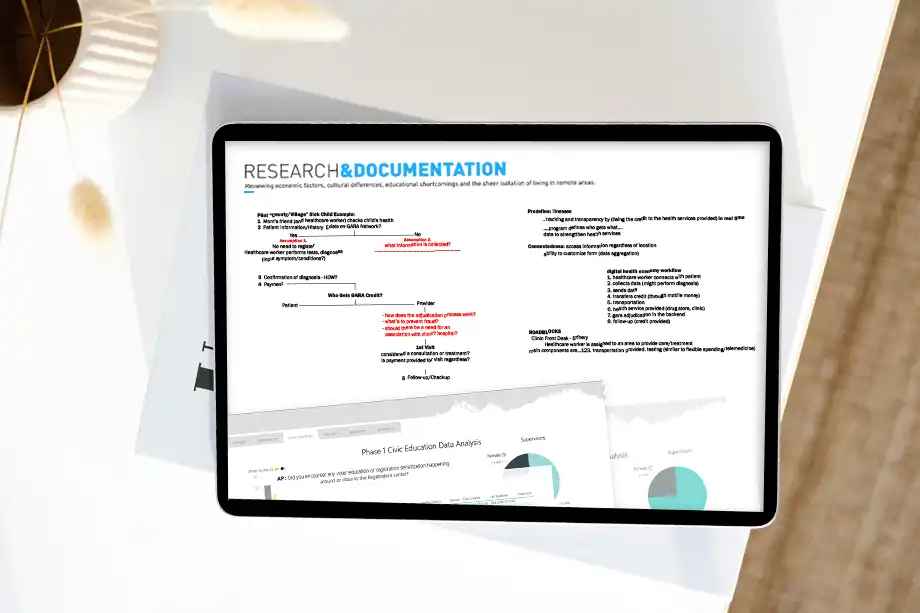
- RoleDigital Transformation and Growth Direction
- AudienceRural Healthcare Providers
- LocationsSouth Africa, Malawi, Liberia
GARA Healthcare Ecosystem
Challenge
Create a seamlessly integrated user-centered platform that enhances individuals' confidence and ability to engage with healthcare providers and improve the overall health literacy to foster sustained trust. This ecosystem should enable dynamic interaction and secure data exchange among all components, fostering more accessible, efficient, and personalized care experiences. By leveraging technology to connect these elements, the system aims to enhance health outcomes, support informed decision-making, and create a sustainable, user-centered model for individuals participating within the digital health landscape.
Steps to Actualization
Digital: Increase access to public health information system utilizing the SMAG Network for backend data collection to ensure accountability and transparency in monitoring and accurately tracking healthcare outcomes through solution-focused needs assessment, strategic planning, questionnaire/data collection design, survey deployment, database development, data analysis, interpretation, report generation and program evaluation.
- User survey and medical data to aid in pinpointing app usage and reason.
- Utilize the four main user types to cultivate their user flows - Young Mother, Community Worker, Healthcare Provider and Transportation Provider.
Connectivity: Reducing the barrier to rural healthcare by connecting those communities with accredited caregivers who provide adequate services regardless of financial means or transportation.
Solution
Established an interconnected digital health ecosystem in which users, healthcare activities, health data, and emerging digital health currencies operate cohesively within a secure digital infrastructure. This system is designed to facilitate real-time interaction, data-driven insights, and value exchange, ultimately improving health outcomes, optimizing care delivery, and advancing innovation across the digital health economy.
Key Performance Indicators
- Engagement Measurement
- Predefined Illnesses
- Transportation
- Access in Rural Locations
- Education Levels
- Platform Usage
- Improved Session Duration
- Registered Healthcare Workers
- Registered Patients